EventLoop
事件循环对象
本质是一个单线程执行器(同时维护了一个Selector),里面有run方法处理Channel上源源不断的io事件。
它的继承关系有:
java.util.concurrent.ScheduledExecutorService因此包含了线程池中所有的方法io.netty.util.concurrent.OrderedEventExecutor,- 提供了boolean inEventLoop(Thread thread)方法判断一个线程是否属于此EventLoop
- 提供了parent 方法来看看自己属于哪个EventLoopGroup
io.netty.util.concurrent.EventExecutorGroup,- 实现了Iterable接口提供遍历EventLoop的能力
- 另有next方法获取集合中下一个EventLoop
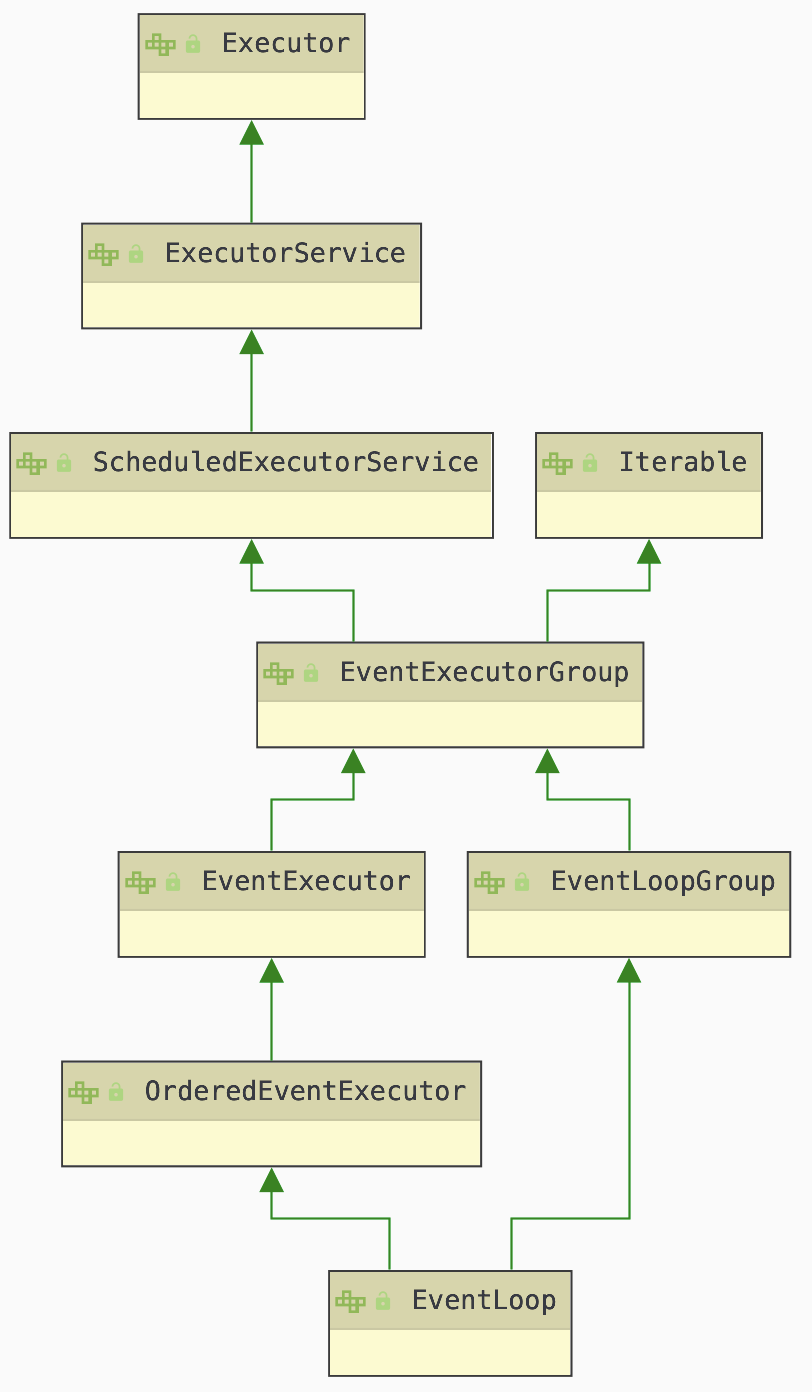
其子类:
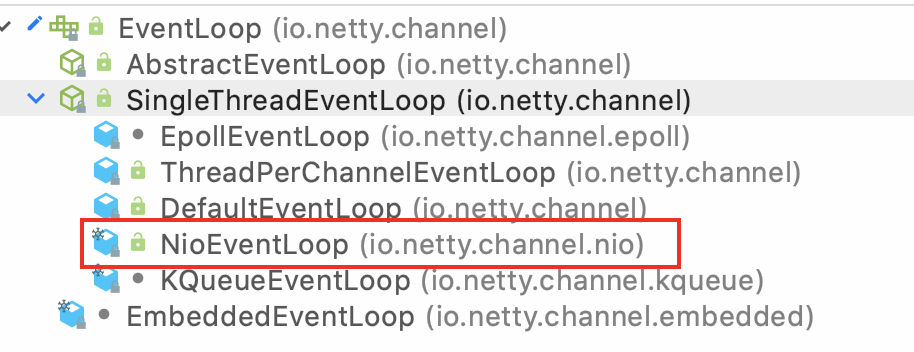
EventLoopGroup
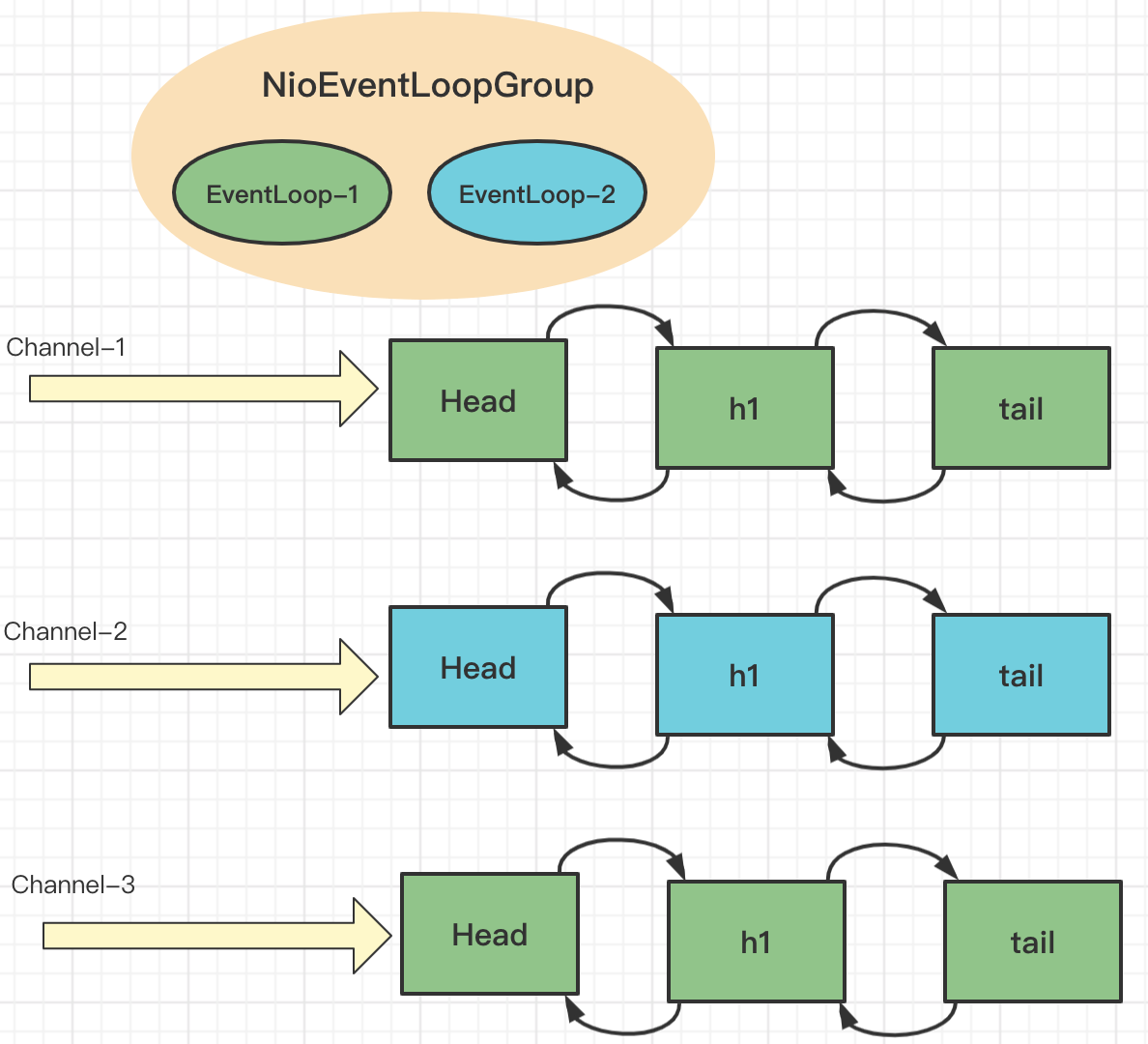
是一组EventLoop,Channel一般会调用EventLoopGroup的register方法来绑定其中一个EventLoop,后续这个Channel上的io事件都又此EventLoop来处理(保证了io事件处理时的线程安全)
-
继承自netty自己的EventExecutorGroup
- 实现了Iterable接口提供遍历EventLoop的能力
- 另有next方法获取集合中下一个EventLoop
// 内部创建了两个 EventLoop, 每个 EventLoop 维护一个线程DefaultEventLoopGroup group = new DefaultEventLoopGroup(2);System.out.println(group.next());System.out.println(group.next());System.out.println(group.next());//输出io.netty.channel.DefaultEventLoop@60f82f98io.netty.channel.DefaultEventLoop@35f983a6io.netty.channel.DefaultEventLoop@60f82f98
优雅关闭
shutdownGracefully()方法。该方法会首先切换EventLoopGroup到关闭状态从而拒绝新的任务加入,然后在任务队列都处理完成后,停止线程的运行。从而确保应用是在正常有序的状态下退出的。
NioEventLoop
可处理io事件、普通任务、定时任务
继承自io.netty.channel.MultithreadEventLoopGroup
演示处理普通任务和定时任务
package com.yakiniku.netty.c2;
import io.netty.channel.DefaultEventLoop;import io.netty.channel.nio.NioEventLoopGroup;import lombok.extern.slf4j.Slf4j;
import java.util.concurrent.TimeUnit;
/** * @Author: yakiniku * NioEventLoopGroup 可传入线程数量 如果不传入,默认为0,然后最终调用的方法是 * * MultithreadEventLoopGroup 类下的 * protected MultithreadEventLoopGroup(int nThreads, Executor executor, Object... args) { * super(nThreads == 0 ? DEFAULT_EVENT_LOOP_THREADS : nThreads, executor, args); * } * * 而 DEFAULT_EVENT_LOOP_THREADS 来自: * static { * DEFAULT_EVENT_LOOP_THREADS = Math.max(1, SystemPropertyUtil.getInt( * "io.netty.eventLoopThreads", NettyRuntime.availableProcessors() * 2)); * * if (logger.isDebugEnabled()) { * logger.debug("-Dio.netty.eventLoopThreads: {}", DEFAULT_EVENT_LOOP_THREADS); * } * } * * 找到系统核心数再*2 * * 启动时打印了 * [main] DEBUG io.netty.channel.MultithreadEventLoopGroup - -Dio.netty.eventLoopThreads: 16 * * */
@Slf4jpublic class TestEventLoop { public static void main(String[] args) { NioEventLoopGroup group = new NioEventLoopGroup(2); //处理io事件、普通任务、定时任务// DefaultEventLoop group = new DefaultEventLoop(); // 处理普通任务、定时任务 System.out.println(group.next()); System.out.println(group.next()); System.out.println(group.next());
//执行普通任务 group.next().submit(()->{ log.debug("ok"); });
//执行定时任务 group.next().scheduleAtFixedRate(()->{ log.debug("定时任务---"); },0,2, TimeUnit.SECONDS);
log.debug("main");
group.shutdownGracefully();
}}演示处理io事件Server
package com.yakiniku.netty.c2;
import io.netty.bootstrap.ServerBootstrap;import io.netty.buffer.ByteBuf;import io.netty.channel.ChannelHandlerContext;import io.netty.channel.ChannelInboundHandlerAdapter;import io.netty.channel.ChannelInitializer;import io.netty.channel.nio.NioEventLoopGroup;import io.netty.channel.socket.nio.NioServerSocketChannel;import io.netty.channel.socket.nio.NioSocketChannel;import lombok.extern.slf4j.Slf4j;
import java.nio.charset.Charset;
/** * @Author: yakiniku * */
@Slf4jpublic class EventLoopServer { public static void main(String[] args) { new ServerBootstrap() .group(new NioEventLoopGroup(2)) .channel(NioServerSocketChannel.class) .childHandler(new ChannelInitializer<NioSocketChannel>() { @Override protected void initChannel(NioSocketChannel ch) throws Exception { ch.pipeline().addLast("inbound-1",new ChannelInboundHandlerAdapter(){ @Override //ByteBuf public void channelRead(ChannelHandlerContext ctx, Object msg) throws Exception { ByteBuf byteBuf = (ByteBuf) msg; log.debug(byteBuf.toString(Charset.defaultCharset())); super.channelRead(ctx, msg); } }); } }).bind(9070); }}演示处理io事件 Client
package com.yakiniku.netty.c2;
import io.netty.bootstrap.Bootstrap;import io.netty.channel.Channel;import io.netty.channel.ChannelInitializer;import io.netty.channel.nio.NioEventLoopGroup;import io.netty.channel.socket.nio.NioSocketChannel;import io.netty.handler.codec.string.StringEncoder;import lombok.extern.slf4j.Slf4j;
import java.net.InetSocketAddress;
/** * @Author: yakiniku * */@Slf4jpublic class EventLoopClient { public static void main(String[] args) throws InterruptedException { //1. 启动类 Channel channel = new Bootstrap() //2。 添加EventLoop .group(new NioEventLoopGroup()) //3. 连接客户端 channel实现 .channel(NioSocketChannel.class) //4. 添加处理器 .handler(new ChannelInitializer<NioSocketChannel>() { @Override //连接建立后初始化操作 protected void initChannel(NioSocketChannel nioSocketChannel) throws Exception { nioSocketChannel.pipeline().addLast(new StringEncoder()); } }) //5. 连接到服务器 .connect(new InetSocketAddress("localhost", 9070)) .sync() .channel();
log.debug(channel.toString()); // 在这里设置断点。 System.out.println();
}}注意设置IDEA设置断点类型要更改为Thread。ALL:阻塞所有线程;Thrad:阻塞当前线程。
NioEventLoopGroup里有两个EventLoop,不同Channel会和其中的EventLoop绑定
EventLoop 分工细化
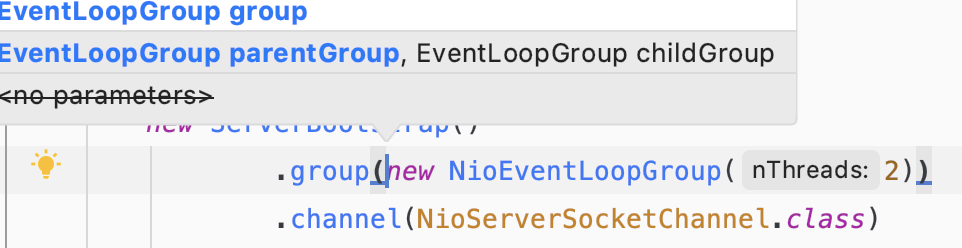
- 细分一: 将处理accept事件和处理读写事件的EventLoop分开。分为boss、worker
不需要给第一个(parentGroup)NioEventLoopGroup设置线程数,因为ServerSocketChannel只有一个,也只会跟其中一个EventLoop绑定(服务器只有一个)
new ServerBootstrap() .group(new NioEventLoopGroup(),new NioEventLoopGroup(2)) .channel(NioServerSocketChannel.class) .....
group里可以传两个EventLoopGroup,我们传第一个,可以只负责ServerSocketChannel上的accept事件, 第二个只负责socketChannel上的读写
/** * Set the EventLoopGroup for the parent (acceptor) and the child (client). These * EventLoopGroup's are used to handle all the events and IO for ServerChannel and * Channel's. */ public ServerBootstrap group(EventLoopGroup parentGroup, EventLoopGroup childGroup) { super.group(parentGroup); if (this.childGroup != null) { throw new IllegalStateException("childGroup set already"); } this.childGroup = ObjectUtil.checkNotNull(childGroup, "childGroup"); return this; }- 细分二: 进一步细分。如果一个channel上处理花费的时间比较长,会影响到其他的channel。
创建一个独立的EventLoopGroup
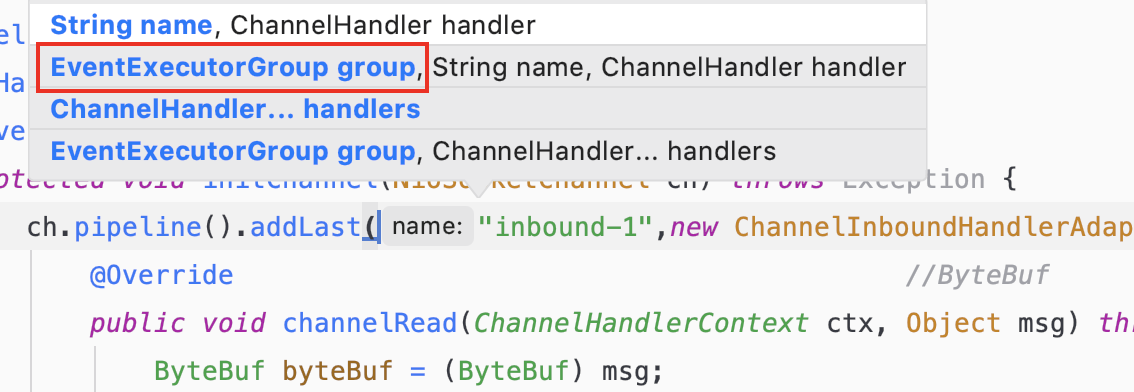
@Slf4jpublic class EventLoopServer { public static void main(String[] args) { // 创建一个独立的 DefaultEventLoop DefaultEventLoop defaultEventLoop = new DefaultEventLoop(); new ServerBootstrap() // 细分1: .group(new NioEventLoopGroup(),new NioEventLoopGroup(2)) .channel(NioServerSocketChannel.class) .childHandler(new ChannelInitializer<NioSocketChannel>() { @Override protected void initChannel(NioSocketChannel ch) throws Exception { ch.pipeline().addLast("inboundHandler-1",new ChannelInboundHandlerAdapter(){ @Override //ByteBuf public void channelRead(ChannelHandlerContext ctx, Object msg) throws Exception { ByteBuf byteBuf = (ByteBuf) msg; log.debug(byteBuf.toString(Charset.defaultCharset())); super.channelRead(ctx, msg); } //可以传入一个EventLoop 这个handler会交由该EventLoop处理 }).addLast(defaultEventLoop,"inboundHandler-2",new ChannelInboundHandlerAdapter(){ @Override public void channelRead(ChannelHandlerContext ctx, Object msg) throws Exception { ByteBuf byteBuf = (ByteBuf) msg;
log.debug("handler-2"); super.channelRead(ctx, msg); } }); } }).bind(9070); }}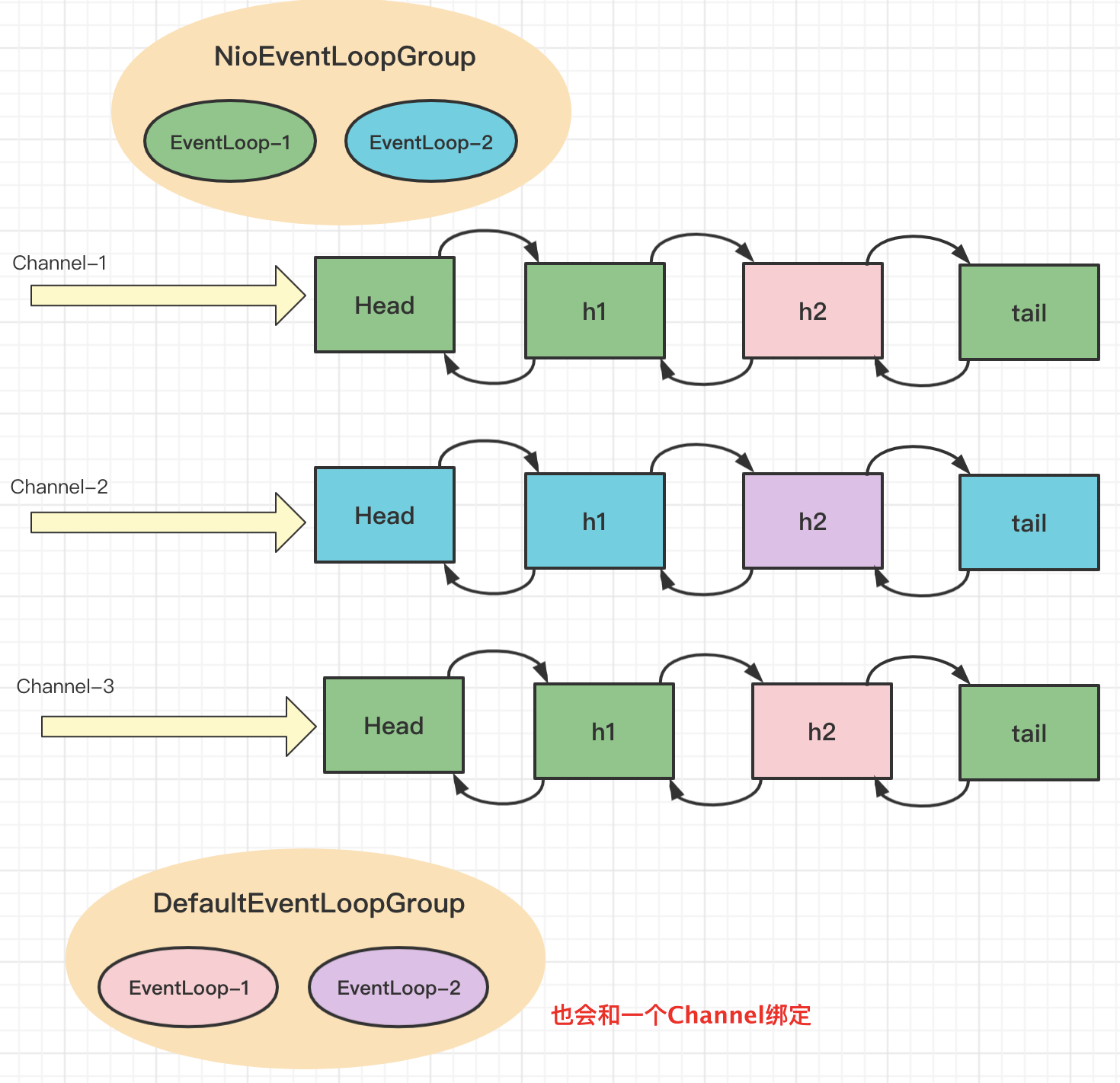
💡handler之间如何交换?
关键代码: io.netty.channel.AbstractChannelHandlerContext#invokeChannelRead()
ChannelInboundHandlerAdapter 里的父类方法
public void channelRead(ChannelHandlerContext ctx, Object msg) throws Exception { ctx.fireChannelRead(msg); }如果两个handler绑定的是同一个EventLoop(一个线程),就直接调用,否则就将要调用的代码封装为一个任务对象,由下一个handler的线程来调用
static void invokeChannelRead(finalAbstractChannelHandlerContext next, Object msg) { finalObject m = next.pipeline.touch(ObjectUtil.checkNotNull(msg, "msg"), next); //获取下一个handler执行器 EventLoop的另一个继承 EventExecutor EventExecutor executor = next.executor(); //判断下一个handler的事件循环是否与当前的事件循环是同一个线程 if(executor.inEventLoop()) { //直接调用 next.invokeChannelRead(m); }else{ //将要执行的代码作为任务提交给下一个事件循环处理 executor.execute(new Runnable() { @Override public void run() { next.invokeChannelRead(m); } }); }}